
EN14 ✠ What were the Knights Templar really? | History and myths of the Temple ✠
Orden Caballeros Templarios - SOMECT—
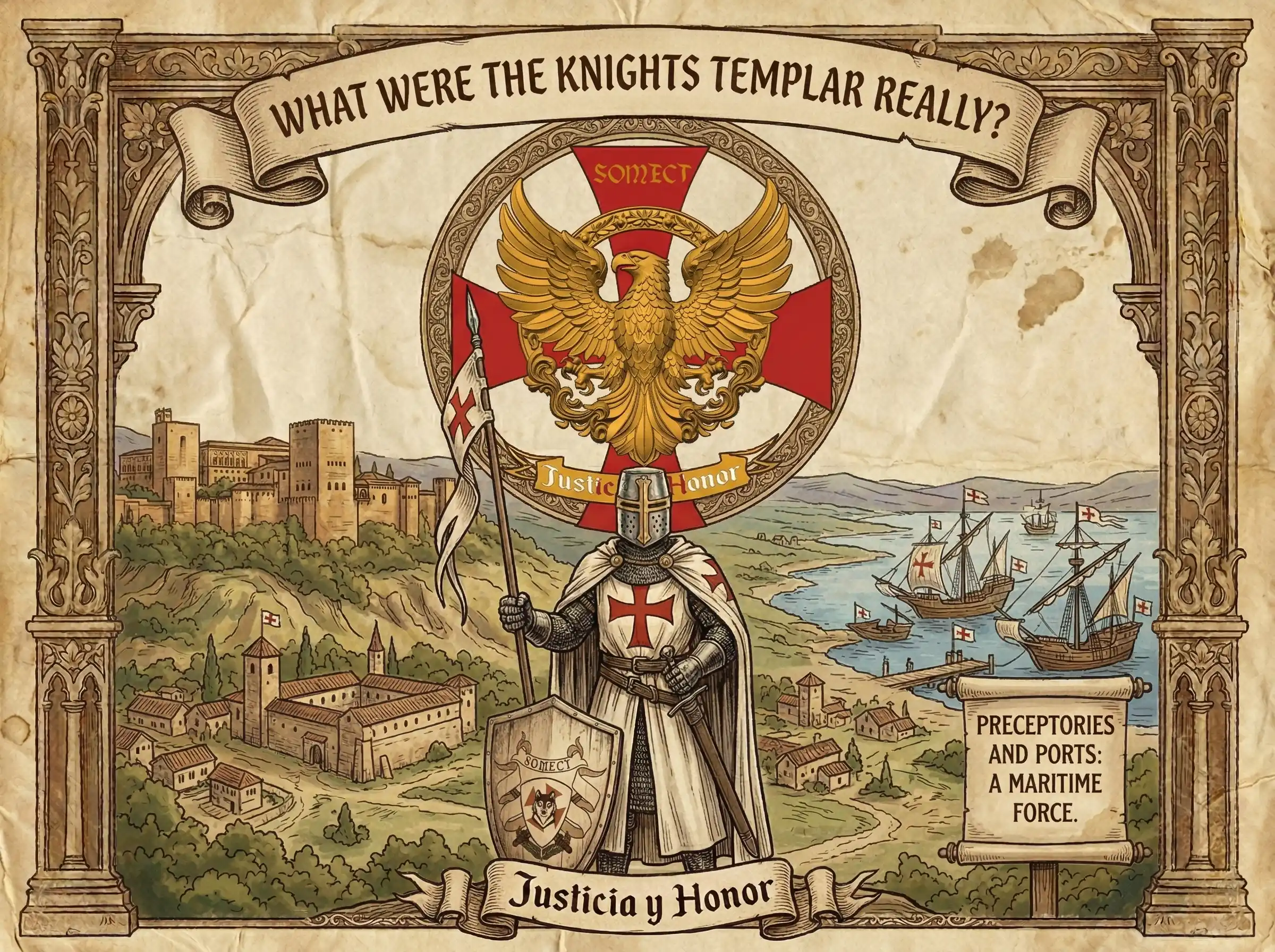
What were the Knights Templar really?
The Knights Templar were a military and religious order founded in the 12th century to protect pilgrims in the Holy Land. Over time, they became one of the most influential institutions of the Middle Ages, combining military, spiritual, and organizational functions.
The Knights Templar have awakened, for centuries, a unique fascination. The Order of the Temple is not only part of medieval history, but also of a collective imagination full of symbols, stories and questions still open.
Beyond the legends, understanding who the Templars really were allows us to approach a solid historical reality ... without losing that little spark of curiosity that has always accompanied his legacy.
✠ Origin of the Order of the Temple
The Order of the Temple was founded in 1119 in Jerusalem, after the First Crusade. Their initial mission was to protect Christian pilgrims in the Holy Land.
A small group of gentlemen, led by Hugo de Payens, gave rise to an organization that would grow rapidly, structuring itself as one of the most unique orders of its time.
An order between the sword and the spirit
The Templars united two unusual dimensions: monastic life and military function. They were warriors and, at the same time, men of spiritual discipline.
This duality gave them a unique identity, based on both strategy and principles, something that would profoundly mark their evolution and legacy.
Templar Power in Europe
Over time, the Knights Templar extended their presence through Europe, including the Iberian Peninsula.
They administered territories, built fortresses and developed advanced organizational systems for their time. Their management capacity and support network made them a highly relevant institution.
✠ The Fall of the Order of the Temple
In the 14th century, the Order was dissolved in a complex process, marked by political, economic and religious tensions.
Although its official structure disappeared, the impact of the Templars did not go extinct, leaving behind a footprint that has continued to generate interest and study over the centuries.
Myth and reality around the Templars
Over time, the Templars have been associated with multiple stories:
- Hidden treasures.
- The Holy Grail.
- Knowledge reserved.
- Undisclosed mysteries.
From a historical point of view, many of these ideas do not have conclusive evidence. However, not all can be discarded absolutely.
History sometimes leaves spaces where certainty coexists with the possibility. And it is precisely there that curiosity arises that the figure of the Temple has kept alive.
Without falling into exaggerations, it is reasonable to think that an order with such a level of organization, influence, and historical journey could have generated elements not yet fully known or understood.
The True Legacy of the Temple
Beyond any interpretation, the strongest legacy of the Templars is found in their values:
- Honor
- Discipline
- Loyalty
- Service
The Temple represents a way of understanding life based on balance, responsibility and commitment to oneself and to society.
These principles have transcended time and continue to be a reference in different organizations that keep the Templar tradition alive.
The Knights Templar today
Today, the interest in the Order of the Temple is still present. There are entities that work on preserving their legacy from a cultural, historical and symbolic approach.
In Spain, the Sovereign Spanish Magistral Order of the Knights Templar (SOMECT) represents a continuity of this spirit, adapted to contemporary reality.
You can find more information in our general article about the Order of the Temple in Spain.
From SOMECT we will continue to share relevant information in future articles of our blog, in this new stage started with enthusiasm and commitment. Until then, receive a warm greeting.
Frequently Asked Questions about Knights Templar
What were the Knights Templar really?
They were a military and religious order of the Middle Ages with functions of protection, organization and support for pilgrims.
Did the Templars have secrets or hidden treasures?
There is no conclusive evidence, although its history has given rise to multiple interpretations and theories.
Do the Templars still exist today?
Yes, there are modern organizations that keep the Templar tradition alive.
