
Sovereign Spanish Magistral Order of the Knights Templar
Order of Rhodes
The Sovereign Military and Hospitaller Order of St. John of Jerusalem, Rhodes and Malta, better known as the Order of Malta, is a Catholic religious order founded in Jerusalem in the 11th century by Amalfi merchants.
He was born within the framework of the crusades and from the beginning, together with his hospital activity, he developed military actions against the Muslim armies (initially Arab, and later also Turkish).
It is now recognized internationally by nations as a subject of international law.
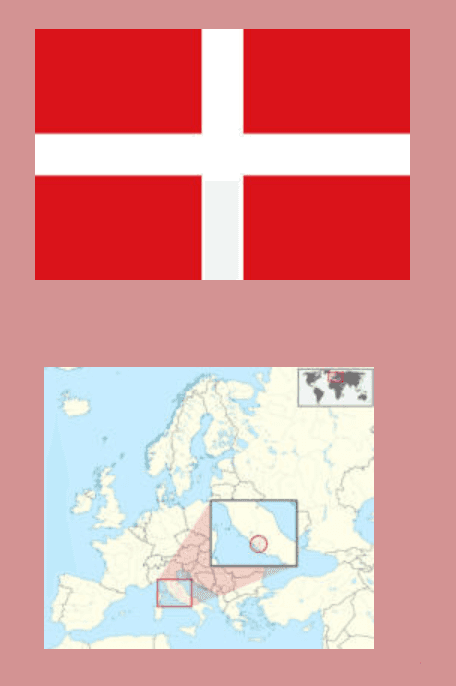
Its headquarters, which has changed siege on several occasions, is currently located in the city of Rome, Italy, on the Via dei Condotti, in the Magistral Palace, near the Plaza de España. That building and the Magistral Villa of the Aventino, which functions as its embassy before the Italian Republic, have status of extraterritoriality.
Since its foundation, the order and its members have had many names. The official name of the Order of Malta is Sovereign Military and Hospitaller Order of St. John of Jerusalem, Rhodes and Malta. Certain abbreviations are often used for legal, diplomatic or communication reasons, such as Sovereign Military Order of Malta, Sovereign Order of Malta or, most of the time, Order of Malta.
At first its members were called Knights Hospitallers (or Hospitallers), as were Knights of St. John, The Religion and Giovannitio Gerosolimitani, referring to their patron saint, his character of religious brotherhood and Jerusalem, where the Order was founded, respectively.
After the conquest of the island of Rhodes, its members became called Knights of Rhodes and, after the cession of the Maltese archipelago, Knights of Malta.
The Order has registered sixteen versions of its denominations and emblems. Some of them are Fratres Hospitalis S. Joannis del Xenodochium Hierosolymitanum (in 1113), Militia Rodiensis Hospitalis S. Ioannis (in 1307), Ordine di San Giovanni di Gerusalemme (in 1802) and Sovrano Militare Ordine di Malta (1927). Likewise, it has been used to refer to this Order the denomination of Religion, in reference to its character as Christian brotherhood.
Origins
Gerardo Tum, founder of the Order of Malta in 1048 The origins of the Order date back to 1048, when Amalfi merchants founded a hospital for pilgrims in Jerusalem. The project was approved by the government of Caliph Husyafer, who granted them a license to build it next to the Church of the Holy Sepulchre. The place was consecrated to St. John the Baptist, which is why his full name was Order of the Hospital of St. John of Jerusalem.
The monastery's superior father, Gerardo Tum, is known as the founder of the Order of Malta. The Order received the recognition of Pope Pascual II in 1113.6 through the bull Geraudo instituteri ac praeposito Hirosolimitani Xenodochii.
Its members adopted the rule of St. Augustine, the black habit and a white cloth cross with eight points, the eight beatitudes. They were also receiving the honorary treatment of frey. Their mission was first of a hospital (medical care for believers who had made a pilgrimage to Jerusalem), but from the government of Raymond du Puy, the second Grand Master of the Order, took on a military character.
In 1140 a kind of elite was created among its militants, a special class of protectors, who would keep the doctrine, norms and principles of the Order.
- It is convenient to clarify that this military order is not the first, since in its beginnings it was a religious order only, and after the formation of the Order of the Temple they imitate this and constitute themselves in military order.
- It would also be interesting to clarify that this order as much as the Templar are considered by the pontificate as Universal Orders to be the difference to quote some: the Teutonic Order or the Hispanics Santiago, Calatrava or Alcantara, for example. While it must be said that this Hospitaller Order became as powerful as the Templar Order.
- Some knights, represented by John of Mata and Felix of Valois, founded the Trinitarian Order in 1198.7 Around 1150 King Geza II of Hungary founded the Order of St. Stephen of Hungary after obtaining a hospital in Jerusalem that was entrusted to Hungarian religious and knights.
- This Hungarian hospital order (whose members were known as Estefanitas) then derived from the Order of St. John, becoming a powerful institution in the Kingdom of Hungary.8 After the first crusade the Christians conquered Jerusalem.
The situation of insecurity that characterized this period caused the military character of the Order to be consolidated, to which the Holy See had initially opposed certain reluctance.7
Nature and objectives
The nature of the Order is set out in its Constitution, where it is stipulated that it is religious-lay (both for having lay members, and for not forcoming common life), sovereign, military, chivalrous, of noble tradition, with legal personality, approved by the Holy See and subject to international law.
The Order also has its own legal system, issues passports and gives autonomous legal personality to its public bodies. Flag of the Order of Malta Its founding principles are synthesized in the slogan Tuitio Fidei et Obsequium Pauperum ('Guard of Faith and gift of the poor'), and are concrete in the activities of their volunteers in care, health and social tasks.
The Order occupies a sui generis position in the international arena, since it does not have a certain territory or non-institutional citizens, two key conditions for its international recognition to be undisputed under the terms of the Montevideo Convention.
Moreover, with regard to the religious order, it maintains a link of dependence with the Holy See. That is why it is considered that its legal character is twofold, since it is inscribed within both international and canon law.
- The Order is composed of natural and legal persons. It is made up of more than 13 000 gentlemen and ladies and approximately 80 000 volunteers and 42 000 workers, mostly health personnel. Individuals are divided into three classes of members:
- The First Class is composed of professed religious vows of obedience, chastity, and poverty, who are religious for all the purposes of canon law, but are not bound to life in common. It is composed of the knights of justice (among whom the Grand Master is chosen) and the conventual chaplains. Military uniform of the Order of Malta.
- The Second Class, whose members have sworn to tend to the perfection of the Christian life, according to the duties of one’s own state, according to the spirit of the Order. It is composed of the knights and ladies of honor and devotion in obedience, of grace and devotion in obedience and of masterful grace in obedience, integrate the Order natural and legal persons. It is made up of more than 13 000 gentlemen and ladies and approximately 80 000 volunteers and 42 000 workers, mostly health personnel.
- The Third Class, whose members cast no religious vows or promise. It is composed of the knights and ladies of honor and devotion, the knights and ladies of grace and devotion, the convent chaplains "ad honorem" or honor, the master chaplains, the knights and ladies of masterful grace and the donated of devotion.
- The legal entities of the Order are the Grand Master, the Grand Priories and Priories, the sub-priorities and the national Associations. The Grand Master, with the deliberative vote of the Sovereign Council, can confer legal personality on other entities.
- The entities of the Order that consider it useful may, with the consent of the Grand Master and after listening to the recommendations of the Legal Council of the Order, acquire in turn the legal personality in the Nations in which they are constituted.
Admission in the Order of Malta Together with the traditional nobility, people endowed with personal nobility, based on an exemplary Christian life and merits towards the Order, are accepted today in the Order.
The idea that the Grand Master exercises upon them a nobilitandy ius is incorrect in receiving them in the Order, for it is not an ennoblement of the person with a hereditary character, but merely a recognition of personal nobility without another repercussion beyond the person receiving grace.
The Grand Master exercises the ius nobilitandi on the rare occasions when he creates titles or ennobles with a hereditary character. Formerly the blood nobility was reserved for the First Class or knights of justice, but the present constitutions do not require that requirement. The first and second groups of the Third Class, i.e. the knights of honor and devotion and the Knights of grace and devotion, are reserved for the blood nobility.
Only by invitation is it possible to become a member of the Order. Volunteers (about 80 000), on the other hand, are always welcome.
